Have you ever heard that almost one-third of RV mishaps occur at the camp, and the travelers have not yet gone on their journey? Making sure you have everything in place can save you a lot of money in accidents, as well as make your trip more enjoyable. Being either a beginner with RV life or an experienced driver, you will find it much easier and safer to properly assess, inspect, and secure your site and make every stay less stressful. Learn useful hints on how to make your RV ready for a safe and comfortable adventure as soon as you get there.
Step 1: Review the site conditions on arrival.
The first thing you should do when you arrive at an RV resort is a strategic site inspection, which will guarantee you a safe and comfortable setup. This, according to Campground Views, involves a thorough evaluation of the general state of the park, such as the roads, the cleanliness of the camp sites, and any form of hazards.
Begin by having a gradual tour of your desirable site by driving through the site and scanning your area visually. Identify such factors of setup as ground levelness, any hindrances that might occur, and sufficient space to expand the slide-outs. Just like RV Online Training suggests, you would also like to ensure that there are no branches or other unforeseen objects that may harm your RV when in position.
Pace the perimeter of the site before reversing in. See whether the ground has depressions, rocks, or soft ground, or has any drainage problems that can affect the stability of your RV. Make sure that you have ample manoeuvring room and that electrical, water, and sewage connection points are available.
In case of any doubts concerning the conditions of the available location, do not be afraid to ask the resort management to find you an alternate location. The RV is an important investment, and proper setup averts possible destruction and disappointment.
Step 2: Check utility connections and facilities.
When you are in your RV, the second most important thing is to ensure that you have carefully checked all your utility links in order to have a safe, comfortable stay. This is by checking electrical, water, and sewer hookups keenly, as suggested by RV Online Training, to find any problem that is likely to ruin your camping experiences.
Start with the electrical pedestal. Ensure that the amperage is appropriate to your RV needs and that the outlets are clean and in good condition. Plug a surge protector and carefully press the plug using secure connections. Since Campground Views advises, check with the electricity supply to ensure that it can support the power requirements of your RV prior to using several appliances.
Then inspect the connection of your water. Check the water hookup to confirm it is free of any leakages or damage. Add a water pressure regulator in order to avoid possible destruction by high pressure, and a clean drinking water safe hose. Check the water supply and make sure it is under pressure and it is good.
Lastly, check the sewer connection. Make sure that the sewer drain is free, in place, and offers a stable connection. Make sure that your sewer hose is not loose and that it does not have any cracks or possible sources of leakage. We have Premium Pull-Thru Full Hook-Up (FHU) RV sites in the Texas Hill Country to ensure that the process becomes as easy as possible for our guests.
These measures will assist you in avoiding the possible electrical, water, or waste system troubles during your stay and make sure that your experience on the RV is comfortable.
Step 3: Command the outside living and cooking field.
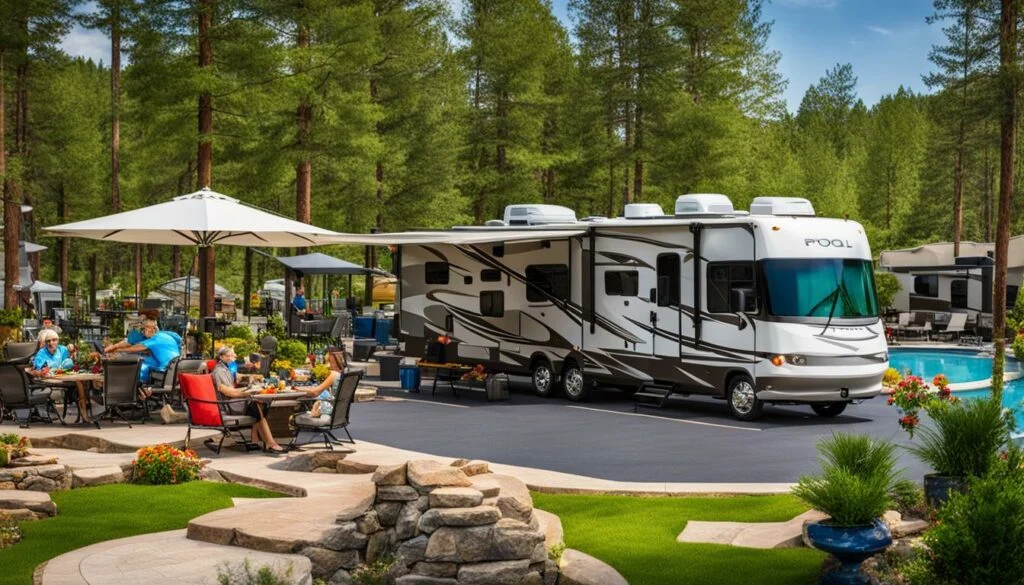
These outdoor features provided in a safe and comfortable setting are a necessary component of your RV experience. The Wandering RV claims that when configuring your outdoor living space, you need to focus on anchoring and stability as the main factors to avoid accidents and have a great setup.
Begin by making sure to place your awning and outdoor furniture carefully. Install secure awnings that have strong anchors that cannot blow away in the event of wind. Arrange outdoor chairs, tables, and mats in such a manner that they do not leave any room for walking and are not dangerous when tripping. Pathways: It is important to ensure that there are clear pathways to ensure the environment is safe outdoors, as advised by RV Online Training.
In the case of outdoor cooking, safety is of primary importance. Keep your grill at least 10 feet away from your RV and any combustible substances. A stable and flat surface is required to avoid falling over, and a fire extinguisher should always be present. You are not to leave cooking equipment unattended or leave without supervision. You should also have a clear space around your cooking area.
Take care of your setup in the kitchen. Cook on a special cooking mat or platform outside and give it a firm surface. Do not leave children or pets in the cooking area, and always monitor the preparation of meals outdoors. With such precautions, you will make your outdoor space safe and enjoyable and add to your RV experience.
Step 4: Examine emergency procedures and contacts.
The unexpected situation is an important aspect of responsible RV traveling preparation. The Wandering RV states that it can be a big difference to the safety and peace of mind to become acquainted with the emergency procedures of the campground.
Once there, it will be important to collect essential emergency information. Enquire of the campground personnel about the availability of storm shelters, evacuation routes, and the exact position of emergency exits. The recommendation in the RV Online Training is to make sure that all the members of your traveling group know these procedures and what to do in case a crisis occurs.
Develop an extensive emergency address book, which can contain the contact information of local emergency services, campground management, medical facilities nearby, and significant personal contacts. Keep this list in several convenient places – have an electronic version in your phone, print out another copy and put it in your RV, and distribute this list to your travel companions. Include the contact information of the local fire departments, police stations, hospitals, as well as the campground office.
Take some time and become familiar with the immediate environment. Determine the closest emergency services, all the available information about the campground plan, and any other distinguishing features or reference points that may assist you in communicating where to be in a crisis. Preparation is not a form of predicting the worst, but it means that you are ready to react effectively in case of any challenges.
Step 5: Check off with the last walkthrough.
You have a complete RV set, but still need the most important task, namely, to give a final inspection. The Wandering RV states that a full walkthrough is required to make sure all connections are well fixed and your campsite is ready to have a safe and enjoyable stay.
Start your last check-up by going through your whole setup methodically. Inspected all utility connections to ensure that they are tight and correctly fitted. Check to make sure that electrical, water, and sewer connections are firmly fitted and are not leaking or straining. This overall check will assist in detecting any issues that may be overlooked and thus turn into serious problems, as recommended by RV Online Training.
Go out and check your exterior connection. Make sure that your awning is rolled out, your outdoor furniture is secured, and make sure that the equipment is anchored. Check your stabilizing jacks to ensure that your RV is steady and stable. Check the vehicle and check for possible dangers or points that could be altered.
Finish your inspection with an inspection of safety equipment. Check fire extinguishers, smoke detectors are on, and emergency contacts must be displayed. Check your emergency plans and pass the information about the campground structure and safety measures to all your company members. Your hard work in the present will help you to avoid any future complications.
Guarantee Security and Comfort in Horseshoe Ridge RV Resort.
It is important to be safe and confident when setting up your RV to spend your stay without worrying. The guide indicates such crucial issues as the assessment of site safety, utility hookup, outdoor space security, and emergency procedures review. We realize these reservations at Horseshoe Ridge RV Resort, and have supported our Premium Pull-Thru Full Hook Up (FHU) sites to ease your installation with level grounds and convenient and secure utility access.
You do not have to worry because you are going to the RV in a resort that cares about your safety and comfort in the Texas Hill Country. Familiarize yourself with our facilities, such as a resort-style swimming pool and expansive outdoor grills, among others, designed to make your stay better. Go to Horseshoe Ridge RV Resort now and book your location where serenity meets opulence. Make a reservation, and come and see the difference that the considered site design and outstanding service will create to you.
Frequently Asked Questions
So what are the conditions to consider when choosing the site conditions at an RV resort?
Begin by evaluating the ground levelness, possible barriers, and space of slide-outs available. Examine the perimeter of the site to find out any risks that may affect the stability of your RV during installation.
What can I do to make my utility hookups safe and functioning?
Inspect upon arrival the electrical, water, and sewer connections. Check to ensure the electrical pedestal is the correct amperage of your RV, look to see that there are no leaks at the water hook-up, and that the sewer hose is in place properly to prevent any waste issues.
What are the safety considerations I need to make when making my outdoor living setup?
Fix your awning and position furniture so that there are no blocked routes. Keep your grill more than 10 feet away when it is connected to your RV, and make sure to keep a fire extinguisher with you at all times when you are cooking outside.
What are the emergency procedures I should get to know in an RV resort?
Get storm shelter and evacuation routes information from campground staff. Prepare a list of emergency contacts, which includes local contacts, and see that everyone in your party understands how to proceed in case of an emergency.
What are the things I need to check in my last walkthrough before settling into an RV resort?
Proper inspection of any utility connection, exterior installation, and safety gadgets, such as fire extinguishers.
Note down all the concerns in the course of the walkthrough and ensure that everyone is familiar with safety measures and emergency numbers prior to having fun during your stay.