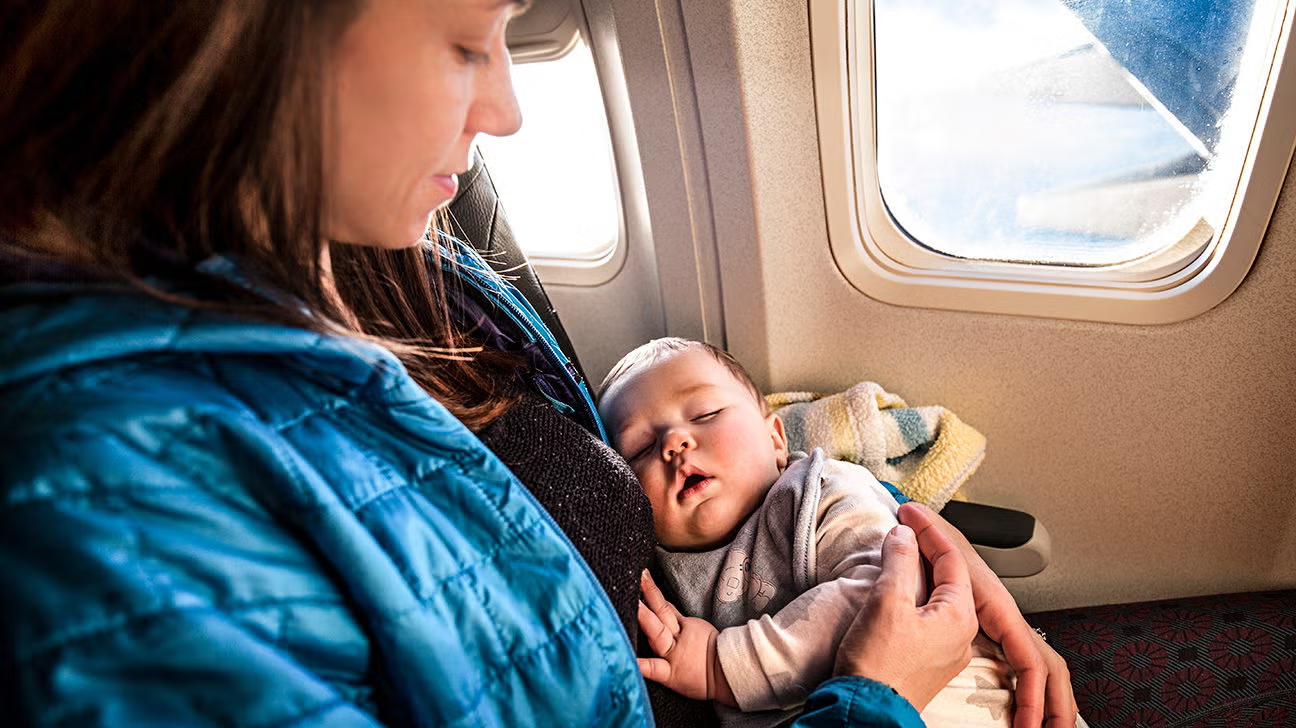
When you are bringing a small child or baby along on an airplane, it can be tricky, particularly as a first-time parent. There’s a lot to consider, from packing necessities, planning schedules, and trying to keep the little ones comfortable during the flight. But when planned and accompanied by a few tips and tricks, flying with young children can be a hassle-free and even fun experience. When preparing for the trip and knowing what to expect, it can make it easier for everyone to enjoy the trip without stress.
Plan Before Your Trip
The best travel with kids starts well before you hit the airport. Whenever possible, book flights that work with your child’s schedule. For babies, a flight between their preferred napping hours may help make for a better trip. Late flights can be avoided to prevent overtiredness and irritability in toddlers.
If you’re travelling with your baby, familiarise yourself with the airline’s rules about bassinets, lap infants, and allowances for strollers. Several airlines offer to bring a stroller and a diaper bag on board for free. These things are very important to review before you travel to prevent surprises on travel day.
Also, make sure you choose seats carefully. The window seats will be able to provide entertainment for curious children, and aisle seats will be easier to get to the restroom and have more room to move around.
Pack Smart and Efficiently
Planning can be important while traveling. Make a list of necessary items so that nothing is overlooked.
Here are some items you will need:
- Diapers and wipes
- Additional clothing for the child and parents
- Bottles, infant formula, or infant food
- Food for older children
- Toys or comfort objects that are loved by the child.
- Blankets and pacifiers
- Medications and simple first aid items.
- Passports and documentation.
Always bring extra clothes, snacks, and diapers. Things can go missing and happen at the last minute; stress can be reduced if you’re prepared.
Place all items that are important to you in an easy-to-reach carry-on bag, not the overhead compartment.
Arrive at the Airport Early
When traveling with children, more time is good. Being early means that you’ll be able to proceed through the check-in and security, and boarding without being rushed.
Numerous airports have facilities for families, including a play area, nursing rooms, and family restrooms. These facilities may assist children to expend energy before boarding.
With early arrival, parents can deal with any last-minute changes or security lines.
Navigate Security Smoothly
Traveling with children can be a challenge when going through airport security; however, preparation can make it easier.
Generally, liquids, like baby food, breast milk, and formula, are permitted in reasonable amounts, which may necessitate further screening. Let security officers know about these items before inspection.
Use simple clothes and limit the superfluous accessories to a minimum to accelerate the screening process. Reminding them to stay calm and telling them the procedure beforehand will also help children not to feel intimidated.
Keep Children Comfortable During Takeoff and Landing
If the aircraft pressurizes or depressurizes, the discomfort may be felt by the infant or young child, who might be confused about the situation.
To help relieve pressure in the ears:
- If you are bottle-feeding, offer a bottle to infants during takeoff and landing.
- Give younger babies a pacifier.
- If age appropriate, have older children sip water, chew gum, or suck on a lollipop.
Decreasing discomfort by swallowing can greatly equalize the pressure in the ears.
If your child is upset during these times, keep a calm and reassuring demeanor. The most common pressure-related discomfort is short-lived.
Bring Plenty of Entertainment
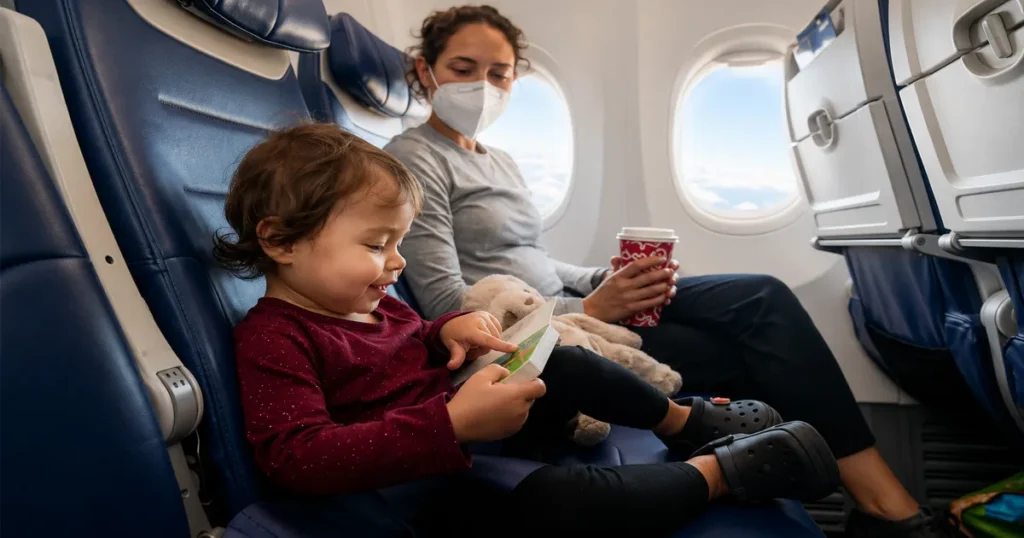
One of the greatest difficulties in flying with children is how to keep them entertained. It’s easy to get bored and restless, particularly on longer journeys.
Pack a variety of entertainment options, such as:
- Coloring books
- Stickers
- Small toys
- Picture books
- Movies or cartoons that have been downloaded.
- Games for learning on a tablet.
A new toy or activity that is introduced during the flight will hold a baby’s attention longer than a familiar toy or activity.
If you have a toddler, try switching activities during the flight to avoid boredom and keep him/her interested.
Prepare Snacks and Meals
Unhappy children are not good travelers! Having familiar items such as snacks on hand can help keep energy levels up and prevent meltdowns.
Pack easy-to-portable and easy-to-clean snacks, including:
- Crackers
- Fruit slices
- Cheese sticks
- Dry cereal
- Granola bars
When your child has special dietary needs, you must pack their own lunch. Food choices at airports might not be all available and may not be acceptable to you.
On longer flights, make sure to drink plenty of water and stay hydrated throughout the flight.
Be Flexible with Routines
Traveling can cause disruptions to a regular schedule, and children can respond differently in this environment than they do at home. Having familiar routines will help, but being flexible will also.
Attempt to keep routines and comfort items that are important to your child, like bedtime rituals or comfort items. Also, be ready to make adjustments when things don’t go exactly as you had planned with naps, meals, and sleep.
This casual approach will help kids feel calmer about the trip and can help to alleviate stress throughout the family.
Handle Flight Delays Calmly
Unfortunately, delays are a fact of air travel. They can be particularly stressful when travelling with young kids.
Have a few activities and snacks that are designated for during “extraordinary waiting times.” Try to let children walk around the terminal, if possible, to burn off energy during delays.
Children’s reactions to unexpected changes can be affected by their attitude. Although it can be frustrating, sometimes it’s easier to make the situation less stressful if a child can be kept comfortable.
Don’t Be Afraid to Ask for Help
Often, airline staff and fellow travellers are more tolerant than parents might think. Flight attendants can answer seating questions, hand out heat bottles, or help with any travel-related issues.
When traveling by yourself with a child, take offers of help when they are offered, as it will be much easier. Keep in mind that many passengers have travelled with children, and they know how tough it can be.
Conclusion
Traveling with children and/or babies requires preparation, patience, and flexibility – it’s not a stressful experience. When families plan, pack wisely, make their journeys fun, and have realistic expectations, it will be a smoother trip. These trips offer an excellent chance to learn, and with every flight, the parents and children are more confident travellers. Aeroplane travel can be a great experience if it is done right and not a cause of worry.